

When it comes to construction and building materials, Cement Fiber Board is a popular choice for many contractors and DIY enthusiasts. As a leading supplier of Cement Fiber Board, I often receive inquiries about the installation spacing requirements for this versatile material. In this blog post, I'll delve into the details of these requirements, offering insights based on industry standards and best practices.
Understanding Cement Fiber Board
Before we discuss the installation spacing, it's essential to understand what Cement Fiber Board is. Cement Fiber Board is a composite material made from cement, cellulose fibers, and other additives. It offers several advantages, including fire resistance, moisture resistance, and durability. These properties make it suitable for a wide range of applications, such as exterior siding, interior wall partitions, and floor underlayment.
Installation Spacing for Exterior Applications
Wall Siding
When using Cement Fiber Board as exterior wall siding, proper installation spacing is crucial to ensure the long - term performance of the siding. The general rule of thumb for vertical joints is to leave a 3 - 6 mm gap between adjacent boards. This gap allows for expansion and contraction of the boards due to temperature and humidity changes.
For horizontal joints, the spacing requirements may vary depending on the type of siding system. In most cases, a 3 - 6 mm gap is also recommended. This gap helps to prevent water infiltration and allows for proper drainage. When installing the boards, it's important to use a spacer to maintain consistent spacing throughout the installation.
The fastener spacing is another critical aspect. For nails or screws, the recommended spacing along the edges of the board is typically 150 - 200 mm, while the spacing in the field of the board is around 300 - 400 mm. This spacing ensures that the boards are securely attached to the wall structure and can withstand wind loads and other external forces.
Roofing
If Cement Fiber Board is used for roofing applications, the installation spacing requirements are different. For lapped roofing systems, the overlap between adjacent boards should be at least 75 - 100 mm. This overlap provides a watertight seal and prevents water from penetrating the roof.
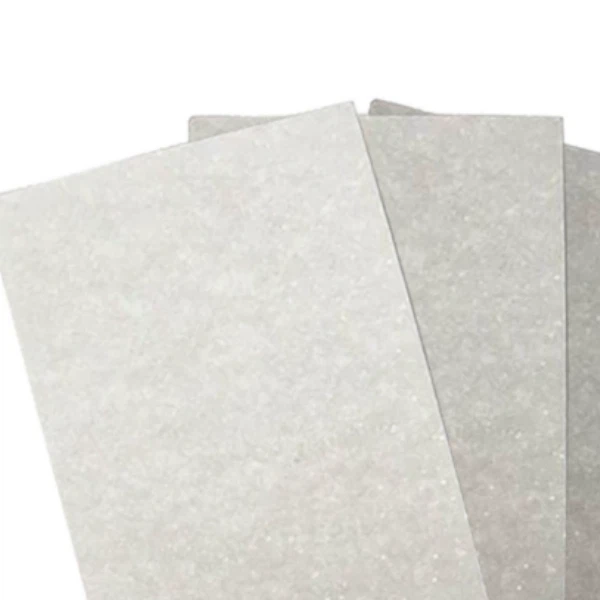
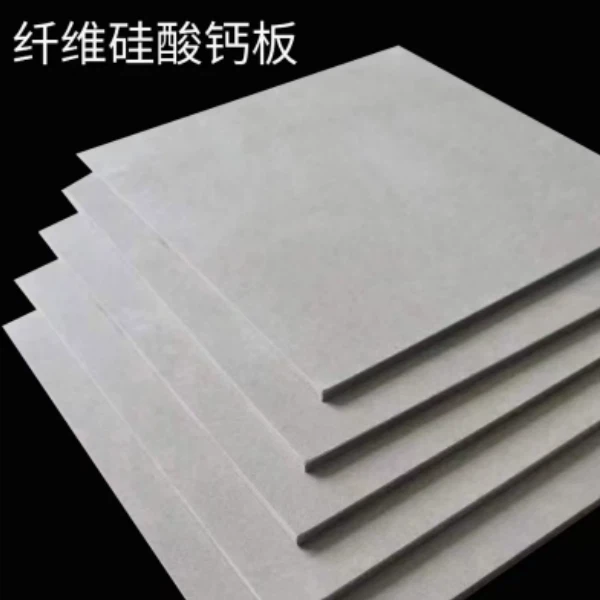
The fastener spacing for roofing applications is also more critical. Nails or screws should be placed at a maximum spacing of 150 mm along the edges of the board and 300 mm in the field of the board. This close spacing helps to secure the boards firmly to the roof structure and prevents them from being lifted by strong winds.
Installation Spacing for Interior Applications
Wall Partitions
In interior wall partition applications, Cement Fiber Board provides a cost - effective and durable solution. For vertical joints between adjacent boards, a 3 - 6 mm gap is recommended. This gap allows for movement of the boards due to changes in temperature and humidity, reducing the risk of cracking.
The fastener spacing for interior wall partitions is similar to that of exterior wall siding. Along the edges of the board, nails or screws should be placed at a spacing of 150 - 200 mm, and in the field of the board, the spacing can be 300 - 400 mm.
Ceiling Installations
When installing Cement Fiber Board on ceilings, the installation spacing requirements are slightly different. For joints between adjacent boards, a 3 - 6 mm gap is still recommended. However, the fastener spacing is more closely spaced to prevent sagging. Nails or screws should be placed at a maximum spacing of 150 mm along the edges of the board and 200 - 300 mm in the field of the board.
Factors Affecting Installation Spacing
Climate
The climate in which the Cement Fiber Board is installed plays a significant role in determining the installation spacing. In areas with high humidity and large temperature fluctuations, wider gaps may be required to accommodate the expansion and contraction of the boards. For example, in tropical regions, a 6 mm gap may be more appropriate than a 3 mm gap.
Board Thickness
The thickness of the Cement Fiber Board also affects the installation spacing. Thicker boards are less likely to warp or expand compared to thinner boards. As a result, the spacing requirements for thicker boards may be slightly different. In general, thicker boards can tolerate slightly closer fastener spacing and smaller expansion gaps.
Building Design
The design of the building, including the height, shape, and orientation, can also influence the installation spacing. For tall buildings or buildings in high - wind areas, closer fastener spacing may be required to ensure the stability of the Cement Fiber Board.
Importance of Following Installation Spacing Requirements
Following the correct installation spacing requirements is essential for several reasons. Firstly, it ensures the structural integrity of the building. Properly spaced boards are less likely to warp, crack, or become detached from the structure, which can lead to costly repairs and safety hazards.
Secondly, it helps to maintain the aesthetic appearance of the building. Consistent spacing between boards gives the building a professional and uniform look.
Finally, proper installation spacing helps to prevent moisture infiltration and water damage. By allowing for expansion and contraction and providing adequate drainage, the risk of mold growth and rot is significantly reduced.
Conclusion
As a supplier of high - quality Cement Fiber Board, I understand the importance of proper installation. The installation spacing requirements for Cement Fiber Board vary depending on the application, climate, board thickness, and building design. By following the recommended spacing guidelines, you can ensure the long - term performance and durability of your Cement Fiber Board installations.
If you are planning a construction project and are considering using Cement Fiber Board, Fiber Cement Sheet, or Fiber Cement Board, I encourage you to reach out to us. Our team of experts can provide you with detailed information and guidance on installation, including the correct spacing requirements for your specific project. We are committed to providing you with the best products and support to ensure the success of your construction project. Contact us today to start the procurement process and discuss your needs.
References
- Building Code Requirements for Residential Construction, [Publisher Name]
- Technical Manual for Cement Fiber Board Installation, [Manufacturer Name]
- Industry Standards for Exterior and Interior Building Materials, [Industry Association Name]