

Slitting Machine
Your Professional Slitting Machine Supplier
Founded in 2020, Danae Building Materials Technology has evolved from a specialized equipment supplier to an integrated industry leader through six years of strategic development. Our growth trajectory reflects a progressive expansion from offering singular products to delivering holistic solutions encompassing:
- Advanced building materials
- Premium raw material supplies
- State-of-the-art construction machinery systems
This transformation establishes us as a one-stop innovation hub addressing the complete value chain of modern construction needs. Leveraging our accumulated technical expertise and market insights, we continue refining our diversified portfolio to meet evolving global industry standards.
Why choose us
Production Market
Sales area : Southeast Asia, Russia, Middle East, Africa, Central Asia,
We have established good cooperative relations with India, the Middle East and Southeast Asian countries.
Our Service
We deliver integrated engineering solutions covering product design, precision manufacturing, global export logistics, and turnkey project implementation. Our full-cycle service portfolio includes:
OEM/ODM production with quality certification
Customized technical design optimization
Technical Expertise
Our dedicated engineering team delivers:
Customized production line configuration
Process optimization consulting
Continuous technical maintenance programs
R&D-driven product innovation
Slitting Machine
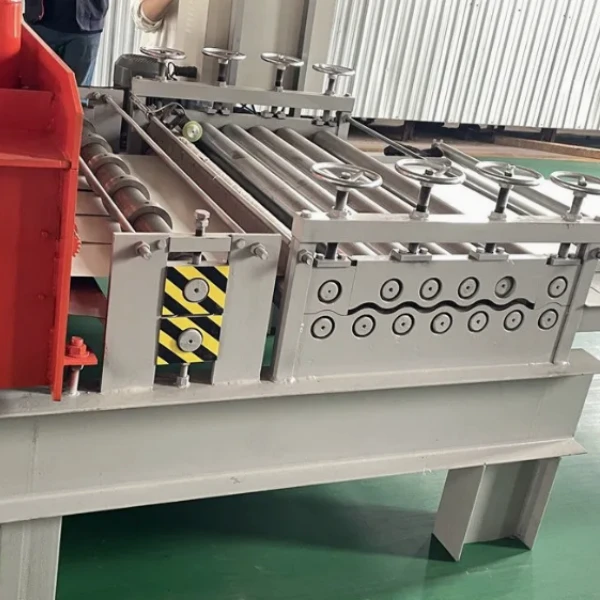
A slitter machine (commonly referred to as a slitter rewinder) is a special type of equipment used to convert / slit many different materials so they can be cut down into narrower rolls. Master rolls are often made to be as large as possible in order to be cost-effective. The rolls are converted / slit to the required widths, and are either rewound to the same diameter / length or reduced to smaller ones depending on their use and market served. These machines are available in a broad variety of configurations to help meet the individual needs of each industry that uses them.
|
Unwind width |
300 ~ 1300 mm |
|
MAX Width of material |
1300 mm |
|
Unwind max. material diameter |
1000mm |
|
Unwind cylinder paper |
3″ (76mm)+6"(152mm) |
|
Rewind width |
SLIT-HSI-1300: 50mm Above (Depending on the number of the cutter and material properties, the Cutting width.) |
|
Rewind diameter |
600mm (standard) |
|
Rewind cylinder paper core |
3″ (76mm) |
|
Max. Machine speed |
400 m/min |
|
Suitable material |
Various types of flexible packaging materials and printing mat |
|
Voltage requirement |
380V 50HZ |
|
Compressed air |
0.5MPa ≤ P ≤0.7MPa |
|
Rated power |
15.3KW |
|
Machine size |
3510(L)*3020(W)*2000(H)mm |
|
Machine weight |
5T |
|
Power consumption per hour |
Estimated 4.8kwh, depending on the operating speed, the actual power consumption is different |
|
Package Size |
290.00cm * 130.00cm * 145.00cm |
|
Package GrossWeight |
1700.000kg |
There are significant benefits to incorporating slitting machinery in your manufacturing or pre-manufacturing processes, including:
Cost Savings: Slitting is far faster and cheaper per pound versus cutting sheets or alternate saw methods requiring extensive labor, time, and blade costs.
Customization: Precision rotary slitters produce coils in specialized widths tailored to customers’ roll forming and component size needs.
Accuracy: Extremely tight width and edge tolerances enable the sheared metal to feed directly into precision stamping and machining tools.
Finish Quality: Clean, smooth, razor-cut edges prevent distortion or saw teeth marks, permitting thinner gauges and improved corrosion resistance.
By providing such size/gauge flexibility, precision tolerance capabilities, effective waste reduction, and reliability improvements over other cutting methods, slitting systems deliver major throughput and quality gains.

Types of Slitting Machines
Different types of slitting machines exist because different industries require their slitting technique. Most Common:
Roll Slitting Machines
It can be used for cutting large roll of materials such as plastic films, paper, textiles, etc. Widely used in printing and packaging industries.
01
Sheet Slitting Machines
Intended for cutting metal sheets and similar thick materials. Used in industries such as construction and automotive manufacturing.
02
Razor Slitting Machines
Cutting uses sharp razor blades to cut soft materials such as thin plastic films Provides clean and accurate lines and edges.
03
Shear Slitting Machines
Two rotary cutting blades for cutting hard materials such as steel and aluminium. Delivers a smooth, burr-free cut.
04
Score Slitting Machines
Instead of slicing through, it instead breaks the material under pressure along the predefined lines. Frequently used in corrugated boards as well as packaging materials.
05
Applications of Steel Coil Slitting Machines in Metal Processing
Metal processing involves various intricate operations, and one of the critical steps is the precision slitting of steel coils. Steel coil slitting machines are indispensable tools in this industry, enabling efficient and precise cutting of metal coils into strips or narrower widths. Their versatile applications span multiple sectors, from automotive manufacturing to construction and packaging.


Metalworking Industry
In the metalworking industry, steel coil slitting machines are extensively used to create precise and narrow strips for a wide range of products. These include:
Automotive components: Slit coils are used to produce essential parts such as body panels, fenders, and exhaust systems.
Construction materials: Narrow strips are used in roofing, siding, and structural elements.
Electrical components: Slit coils are utilized in the production of transformers, motors, and various electrical devices.
Packaging and Printing
The packaging and printing industries rely heavily on steel coil slitting for the creation of packaging and printing materials.
Cans and containers: Narrow strips are used to manufacture cans for food, beverages, and other products.
Corrugated cardboard: Slit coils are processed into corrugated cardboard for packaging applications.
Printing: Slit coils are used in the printing industry to produce narrow strips for labels, tags, and other printing materials.
Aerospace and Defense
The aerospace and defense sectors demand high-precision slitting of metal coils for critical applications.
Aircraft components: Slit coils are used in the fabrication of airplane wings, fuselages, and other structural components.
Missile systems: Narrow strips are utilized in the production of missile casings, fins, and guidance systems.
Military vehicles: Slit coils are employed in the construction of military vehicles, providing precise and durable materials.
Medical Applications
Steel coil slitting machines are essential in the medical industry for the production of critical medical devices.
Surgical instruments: Narrow strips are used to create surgical instruments such as scalpels, forceps, and clamps.
Medical implants: Slit coils are utilized in the fabrication of medical implants, including stents, pacemakers, and orthopedic devices.
Medical devices: Slit coils are used in the production of various medical devices, including catheters, needles, and surgical tubing.
ADDITIONAL SLITTING MACHINE FEATURES
Beyond slitting heads housing rotating hardened steel knives, some common ancillary features include:
Edge Trimming
Mounted knives on sides remove rough, flawed strip edges.
Surface Inspection
Rollers detect defects and signal marking devices to identify imperfect areas.
Recoilers
Take-up reels or tension stands wind slit strips to specified diameters.
How Slitter Works
A slitter is an industrial device used to cut large parent rolls of material, such as paper, film, foil, and various thin materials, into narrow rolls of the desired width. The cutting method performed by a slitter is called slitting, and its typical working principle is as follows:
Loading Material
A large roll of material (master or parent roll) is mounted on an unwinding stand.
Slitting Process
After the material is unwound, it is cut lengthwise by a sharp blade or laser. Depending on the machine, the cutting blade may be a circular shear, a scoring blade, a razor blade, or a straight blade. The choice of cutting method depends on the thickness of the material, its tensile strength, and the quality requirements of the end use.
Rewinding the Slit Material
After the material is cut, the narrower strip is rewound using a slitter rewinder, thereby dividing the parent roll into multiple rolls. Slitter rewinders can operate at different tensions depending on the specific material and end use requirements.
Removal and Packaging
The completed, rewound rolls are removed from the machine and prepared for the next processing stage or transportation.
Slitter operation process
Start-up part
1. Turn on the power switch, press the "Emergency Stop Reset" and "Ready to Run" buttons, and then turn the key to switch the machine mode to "Run". Check whether the voltage and current on the main operation panel are correct and stable.
2. Turn on the power and check whether the oil level and pressure gauge of the main hydraulic transmission system are correct and stable.
3. Open the start stop valve and confirm that the air pressure is correct, not less than 6.0bar, and stable.
Parameter setting part
1. Set the material type, thickness, length, width, etc. as needed.
2. Configure the winding length and width of the corresponding material specifications.
3. Select a suitable winding station, adjust the roller arm and roller, and install the paper tube of the corresponding size.
Loading, threading and splicing part
1. Loading: According to the plan and actual situation, place the mother roll on the aging rack, position it on the slitter unwinding rack with the corona surface (inside/outside) as the reference, clamp the steel core through the control button, and then retract the steel core support arm and the overhead crane.
2. Threading: When there is no film on the slitter, threading is required. Use the threading device and function button of the slitter to tie one end of the film to the threading chain ring, and then start the threading button to evenly distribute the film on all rollers along the slitting path.
3. Material splicing: When there is film on the slitter and the roll needs to be changed, use the vacuum splicing table. First, move the splicing table to the working position, manually place the film flat on the traction roller of the slitter, and then start the upper vacuum pump to smoothly adsorb the film on the splicing table. Apply double-sided tape and trim the excess film below. Place the film flat on the unwinding rack, and then start the lower vacuum pump to ensure that the film is bonded flat.
Operation section
1. Adjust the specifications, install the paper tube on the inner and outer winding arms, and prepare for operation after confirming that the pressure wheel is in place.
2. Set ANTI-STATIC BARS on the main operation panel to AUTO, enable READY TO RUN, and start MACHINE RUN to start running.
Slitting control
During operation, monitor the process and adjust the contact pressure, bow roller, edge pulling roller, edge guide, slitting speed and unwinding tension as needed.
Winding section
1. When the inner/outer winding is completed and the machine stops, use the unloading button to place the film on the prepared unloading cart, and then cut the film roll and seal it with tape.
2. Press the chuck release button to release the chuck. Check that all film rolls have been removed from the paper tube. If any film rolls are still stuck, remove them manually.
3. After all the films are unloaded onto the cart, use the "Load Film" button to raise the winding arm, install a new paper core, and connect the films neatly for the next slitting cycle.
Stop section
1. The machine automatically stops when the film reaches the preset length.
2. During operation, if you need to stop, press the "MACHINE STOP" button.
3. If you need to stop urgently, press the "Emergency Stop" button for more than 2 seconds.
4. If equipment failure or man-made accident occurs, press the "Emergency Stop" button immediately.
FAQ
We're professional slitting machine manufacturers and suppliers in China, providing high quality customized products with low price. We warmly welcome you to wholesale cheap slitting machine for sale here from our factory. For quotation, contact us now.
second hand slitter rewinder machine, building construction equipment for sale, vertical slitting machine