

What This Product Does
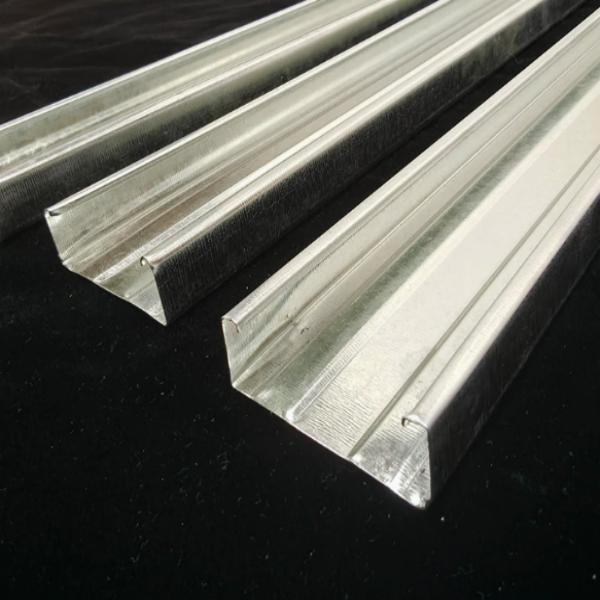
Walk into any commercial building with a suspended ceiling-offices, hospitals, shopping centers, airport terminals-and look at the perimeter where the ceiling meets the wall. That clean, straight line is achieved by a simple L-shaped steel profile. It mounts to the wall, supports the main tees of the grid, and keeps the entire ceiling level. Without this trim, the edges of ceiling panels would sag. Gaps would appear between the grid and the wall. The system would look unfinished and perform poorly. Contractors know that a reliable metal angle for suspended ceiling saves time and prevents call-backs-it is the starting point of any drop ceiling installation. Get it right, and everything else follows.

How It Works
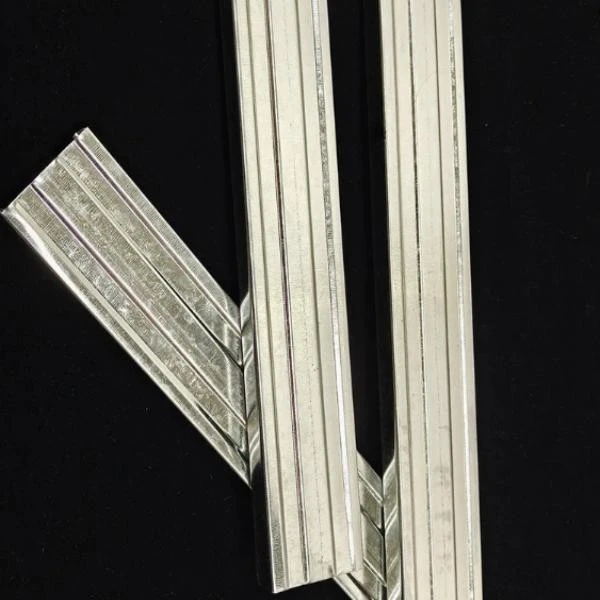
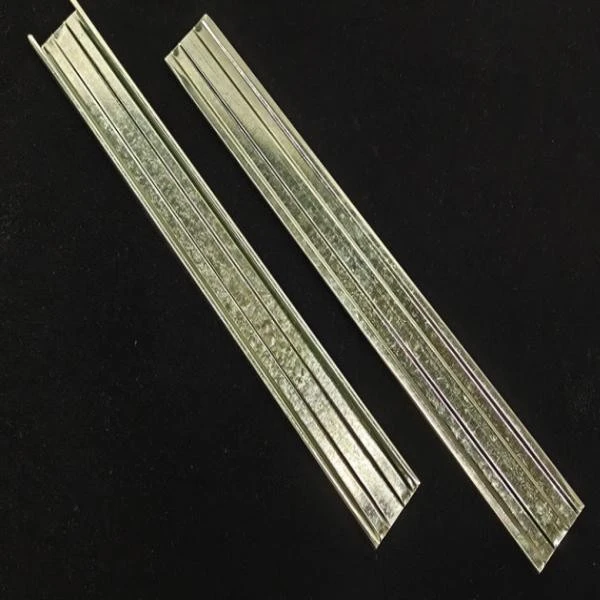
The profile has two legs. The vertical leg attaches to the wall-concrete, steel stud, or timber-using screws, nails, or anchors. The horizontal leg faces inward and provides a ledge for the main runners to rest on. The weight of the ceiling panels transfers through the runners, down to the wall angle, and into the building structure.
Installation height gets marked on the wall. The angle gets fixed continuously around the perimeter. Main tees then lay into the angle at each end, with cross tees filling the grid. This sequence applies to any suspended ceiling system, whether using drywall, mineral fiber, or metal panels.
Material Selection – Steel, Aluminum, or PVC?
Steel is the default choice for most commercial projects.
Aluminum is lighter and corrosion-resistant, but it costs roughly twice as much per meter and deflects more under load. PVC is moisture-proof and easy to cut, but it lacks the rigidity to support fire-rated gypsum boards or heavy acoustic insulation. Steel holds screws firmly, resists impact during installation, and performs predictably under temperature changes.
We use hot-dip galvanized steel-Q195 or Q235 grade-with zinc coating weights from Z120 to Z275. The galvanizing step is critical. Hot-dip bonds the zinc to the steel at a molecular level. Cut or bend the angle, and the coating stays intact. Electro-galvanized alternatives flake at the cut edge, which is where rust starts.
For buildings near coastlines, cold storage anterooms, or spaces with indoor pools, we recommend Z275 coating. For standard office or retail interiors, Z120 is sufficient. We have supplied material for all these conditions and can advise based on your specific environment.
Technical Specifications
The table below covers our standard offering. The right column explains how each spec affects your installation.
|
Parameter |
Standard Value |
Effect on Installation |
Selection Guidance |
|
Leg dimensions |
20×20, 24×24, 25×25, 30×30, 32×32 mm |
Larger flanges provide more bearing surface for the grid |
24×24 or 25×25 suits most drywall ceilings. 30×30 or above for thick acoustic boards or heavy insulation |
|
Steel grade |
Q195 or Q235 |
Q235 offers higher yield strength; Q195 is softer but less expensive |
Q235 for seismic zones or fire-rated systems. Q195 for lightweight mineral fiber ceilings |
|
Coating |
Hot-dip galvanized, Z120–Z275 (g/m²) |
Coating weight determines corrosion resistance |
Z120 for normal indoors. Z275 for coastal, high-humidity, or condensation-prone areas |
|
Thickness |
0.4mm–0.6mm (0.5mm standard) |
Thicker material carries more load but requires more cutting effort |
0.5mm balances performance and workability. 0.6mm for high-traffic or vibration-prone spaces |
|
Yield strength |
240–310 MPa |
Determines permanent deflection point under load |
Meets most international seismic codes. Test reports available on request |
|
Standard length |
3m standard; 3.66m (12ft) available |
Longer sections reduce field joints; longer than 3.6m increases shipping cost |
3m is the most freight-efficient. 3.66m saves labor on long straight walls |
|
Profile tolerance |
±0.05mm |
Tighter tolerance keeps the angle flush against the wall |
Prevents cumulative alignment issues on long runs |
Product Characteristics
We manufacture this product with attention to a few key details.
Straightness
Our roll-forming line uses twelve forming stands, which maintains consistent section shape throughout the run. The profile stays within ±0.05mm tolerance. On-site, this translates to less time spent straightening bent pieces.
Coating integrity
The hot-dip galvanizing process applies zinc after forming. The coating covers edges and corners fully. Our test data shows minimum 20 microns at the most vulnerable points. We verify this with a magnetic gauge during production.
Workability
The material is rigid enough to carry heavy boards but cuts cleanly with standard aviation snips. No specialized tools are required. Drilling holes for anchors does not cause coating separation.
Load capacity
At 0.5mm thickness, the heel of the angle supports approximately 120kg per meter before permanent deflection. Standard fire-rated ceiling loads typically range from 30kg to 50kg per meter. The weak point in the system is usually the wall anchors, not the profile.
Seismic compliance
Yield strength between 240 and 310 MPa meets most international seismic design requirements. We can provide third-party test certifications with each shipment.
Comparison of suppliers
When comparing suppliers, keep in mind that a properly specified metal angle for suspended ceiling is only as good as its consistency. We hold tighter tolerances than most manufacturers, so your grid stays square from corner to corner without extra shimming.
Manufacturing Process and Quality Control
The production sequence is straightforward but has specific controls at each stage.
Process flow: Slit coil → hydraulic decoiling → roll-forming (12 stands) → in-line punching (where specified) → automatic cut-off → visual and dimensional inspection → strapping and packaging.

Quality checks we perform:
1.Incoming coil inspection. Each coil is scanned for surface defects before it enters the line.
2.In-process dimensional check. Digital calipers measure the profile every fifteen minutes. Adjustments happen immediately if the reading drifts.
3.Zinc coating verification. A magnetic thickness gauge checks the coating at edges and corners. Minimum accepted reading is 20 microns.
4.Packaging drop test. A strapped pallet gets dropped from one meter to confirm edge protectors survive handling.

We keep quality records for five years. If a shipment does not match your specification, we reimburse the lot. This is stated in our standard terms.

This profile fits any suspended ceiling system where the perimeter requires support. Common applications include:
Commercial office buildings and medical clinics
Educational facilities and school corridors
Retail spaces and shopping centers
Hotel ballrooms and function rooms
Airport terminals and railway stations
Industrial cleanrooms and manufacturing plants
Cold storage anterooms and high-humidity spaces
Sound studios where acoustic insulation is layered above the ceiling
Renovation projects are another major use case. When old ceilings get removed, the existing perimeter trim often shows rust or damage. Replacing it during a retrofit is a standard practice.
For large-scale projects-10,000 square meters or above-we can calculate total length requirements and suggest splice points to reduce waste. Provide your floor plan and we will run the numbers.
Project References
Beijing Daxing International Airport – Terminal 2 refurbishment
Supplied edge trims for fire-rated ceiling zones. The project required full material traceability, which we provided.
Lanzhou Wanda Plaza – retail podium
Used 3-meter continuous lengths across multiple floor levels. The installation team confirmed all pieces arrived straight and within tolerance.
Gu'an Trade City – mixed-use complex
Material specified with Z275 coating for underground parking areas where condensation occurs. The coating passed on-site thickness verification.

Customer Feedback
An Indian contractor on their third repeat order: "No surprises. Dimensions match the PI, packaging holds up to Mumbai port humidity. That's all we ask."
A Turkish project manager: "The packing color makes sorting by size easy on site. Small touch, big time saver."

About the Company
Danae Build Tech Co., Ltd. was established in 2020. The company supplies building materials and production raw materials to customers in more than ten countries, including the Middle East, Southeast Asia, Africa, and South America.

Building materials: gypsum boards, fiber cement boards, XPS insulation, PVC membranes, and steel furring channels.
Raw materials for gypsum board manufacturing: facing paper, modified starch, PVAc glue, foaming agents, and additives.
Supporting machinery: production lines, ceiling equipment, forklifts, and wrapping machines.
We operate our own gypsum board lines, which gives us technical insight into how our raw materials perform in actual production.
Our team responds to inquiries within four business hours and provides after-sales support on all shipments.
Export and Logistics Support
We have been handling export shipments for over a decade. It's not something we outsource to a third party and hope for the best-we manage it directly, from the paperwork to the port.
I have personally dealt with customs requirements across different countries, and I can tell you that each one has its own quirks. Some ports want specific markings on the packages. Others require certain wording on the bill of lading. We have learned these details the hard way, so our clients do not have to.
When we book freight for you, we look at multiple shipping lines and routes. Not every option is the same price, and not every route offers the same transit time. We match the option to your deadline and budget. If you have a preferred freight forwarder, that is fine too-we coordinate with them directly.
Container loading is something we supervise personally. We make sure the bundles are stacked properly and the edge protectors stay in place. I have seen what happens when loading is rushed-bent material, damaged packaging, claims that take weeks to resolve. We avoid that by being present during the loading process.
If something does go wrong-damage during transit, a dimension that does not match, or an issue with the coating-we replace the affected material at no cost to you. This is not a marketing line. We have done it before, and we will do it again if needed.
What we aim for is straightforward: you receive the product as specified, on time, without chasing us for updates. We send tracking information proactively. We respond to questions about shipping within a few hours. And if you are new to importing from China, we walk you through the documentation requirements step by step.
We do not claim to be perfect. But we have learned from every shipment we have handled, and our repeat clients are the proof that the system works.
FAQ
Q1 – Can I install this over existing drywall or does the wall need to be bare?
The metal angle for suspended ceiling can be installed directly over existing drywall if the surface is flat and sound. Use longer screws-at least 30mm-to reach the studs. For tiled or uneven walls, install furring strips first to create a flat mounting surface.
Q2 – What happens if my wall isn't perfectly straight?
The angle follows the wall, so a bowed wall means a bowed grid. For minor irregularities-up to 5mm over 3 meters-use shims behind the vertical leg to keep the horizontal flange level. Larger deviations need wall correction or a deeper profile.
Q3 – What's your typical lead time from order to dispatch?
Standard sizes with Z120 ship in 7–10 working days. Custom sizes or Z275 add 2–3 days. Our rolling line takes about two days for a full container; the variable is coil sourcing. Ask about stock before ordering-we are upfront about what we have.
Q4 – Do you offer custom punching or notching, and is there a setup fee?
Yes-holes at specified intervals, slot holes for adjustment, or cutouts for fixtures. Setup fee is about USD 150 per pattern, waived for orders above 15 tons. Tooling stays on file, so repeat orders incur no extra charge.
Q5 – Can I mix different sizes or thicknesses in one container?
Yes, for trial orders. You can combine two or three profiles in a single 20-foot container. Each size must meet our minimum batch quantity-typically 2 tons per profile. We pack and label each type separately for easy warehouse sorting.
Ordering Information
We supply trial pallets for installation testing and full containers for project-scale orders. Custom lengths, punching patterns, and packaging are available.
Contact us for a job-specific quote. We respond within four business hours. Quotations are valid for thirty days.
Danae Build Tech Co., Ltd.
Economic & Technological Development Zone, Shijiazhuang, Hebei, China
WhatsApp: +86 15081153583
Email: danaebuilding@gmail.com
Hot Tags: metal angle for suspended ceiling, China metal angle for suspended ceiling manufacturers, suppliers, factory, ceiling grid manufacturer, false ceiling grid, gypsum board regular, hempcrete, moisture resistant gypsum board, t bar ceiling grid


