

When buyers look for a gypsum board lamination machine, the first number they compare is often linear speed. The more useful question is whether the speed set at the laminating section matches the output needed at the end of the line. This is the point many buyers only work out after installation. In a PVC gypsum ceiling tile workshop, the laminator usually sets the pace, but daily output is decided by the slowest stage downstream.
Why line speed and output are not the same number
A laminating machine rated at a given linear speed tells you how fast board moves through coating and film application. It says nothing about how many finished ceiling tiles leave the workshop per shift.
Between the laminator and the packed pallet sit cutting, edge sealing, and sometimes shrink wrapping. When any of these runs slower than the laminator, boards pile up in front of it and effective line speed drops to the pace of that bottleneck. This gap between rated capacity and real output is the one buyers most often discover after the machine is already running.
Where the mismatch usually appears
Cutting is the first place to look. If the saw indexes slower than the laminator feeds, the laminator waits part of every cycle. Edge sealing is the second: manual or semi-automatic sealing cannot keep up with a fast laminating section, so semi-finished boards stack up. Board size changes matter too, because switching tile dimensions means resetting cutting and sealing, and a line matched for one size can lose its rhythm when the product mix shifts.
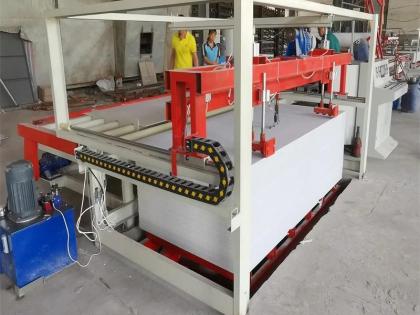
Danae's ceiling machine range is built around this reality. The PVC Gypsum Board Lamination Machine applies PVC film on the face and aluminum foil on the back in a single pass. The adhesive is coated on both sides at the same time (double-sided synchronous coating), which keeps the film flat and saves a separate turning step. A steady laminating section only turns into output when downstream stages keep pace, which is why the Gypsum Ceiling Board Lamination Machine configuration pairs the laminating unit with cutting and handling sized for standard 600×600 mm tiles.
For buyers who already run a dependable cutting solution and simply need the laminating stage, the PVC Film Laminating Machine for Gypsum Board can be added as a single unit, provided its speed setting leaves headroom for the stages around it.
How to set a realistic output target
Work backward from the number you need. Three steps cover most cases:
Set the target
decide how many finished tiles per shift, at which tile size.
Convert to a cutting pace
divide the target by available working hours to get the required cut rate per hour.
Compare with laminating and sealing speed
the slowest stage sets your real line speed, and every other stage should sit at or slightly above it.
When the product mix includes more than one tile size, plan for reset time between sizes and set line speed for each size separately, rather than assuming one setting covers all. A line configured this way runs steadily instead of in bursts, and operators spend their time on quality checks rather than clearing piles of semi-finished boards.
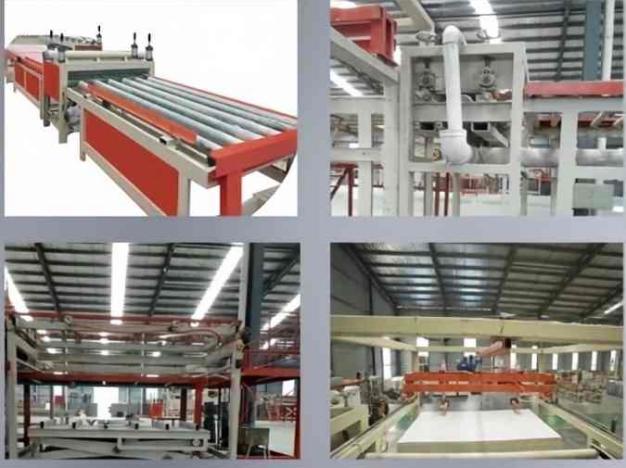
Some buyers prefer every stage coordinated before delivery. The Gypsum Ceiling Tile Factory Equipment option bundles laminating, cutting, sealing, and shrink wrapping so the stages are matched at the factory rather than on site.
Others start with the laminating unit and add stages as demand grows, which works when the original frame and control architecture allow later connection to cutting and sealing equipment. Either path is workable; the risk lies in choosing a speed setting too low to support the stages added later.
What suppliers need to recommend a matched line speed
A quotation is only as useful as the information behind it. Suppliers can propose a realistic line speed once the inquiry states four things: target finished tile size, board thickness range, required output per shift, and whether gypsum boards will be purchased or produced in-house.
With those details, the recommended laminating speed, operator count, and cutting and sealing configuration become concrete figures rather than estimates. Buyers exploring ceiling tile production alongside existing board manufacturing can review the gypsum ceiling machine products page, then discuss with Danae's team which stages to include now and which to add as demand grows. The aim is simple: laminating, cutting, and sealing settling into the same pace from the first production shift.