

Moisture failure is a frequent complaint in suspended ceiling projects. A gypsum board PVC film that lacks proper adhesion or moisture barrier performance can begin to lift at the edges within months of installation, especially in bathrooms, kitchens, and covered outdoor corridors. The problem rarely comes from the gypsum core alone. When a ceiling fails, the useful question is not "which film is best" but "where did moisture get in first."
Why Peeling Starts at the Edges
Open a failed ceiling in a bathroom and the first thing you notice is usually not sagging. It is a row of lifted edges along the cut side of the board, with the film curling back a few millimeters like a page starting to turn. Underneath, the paper liner is soft and slightly darker than the rest of the board. Many buyers assume the film is at fault here; in many of the cases we review, it is not. Moisture entered at the edge, the paper swelled, and the bond line gave way before the core did.
Paper-faced gypsum board absorbs moisture through exposed cut edges and through micro-gaps at the film overlap. When the PVC film is thin, poorly plasticized, or laminated with an adhesive that loses tack under warm humid conditions, water vapor finds a path behind the film. Once moisture reaches the paper liner, the paper swells, the bond line shears, and the film peels. This is why many ceiling failures appear as edge curling or bubble formation rather than core sagging.
Edge detail is a specification item, not a finishing afterthought. A tight film wrap at the board edge, or a sealed cut edge on site, addresses the first entry point before any film upgrade is considered.
The edge fix is usually cheaper than expected. A standard decorative PVC film for gypsum ceiling tiles typically runs around 0.07 mm to 0.08 mm nominal thickness. Below 0.07 mm, we have seen edge curl appear within one humid season in bathroom installations, based on call-back reports from projects using lower-gauge film. Plasticizer migration is the second factor: low-quality films can become brittle over time or release additives that attack the adhesive layer. Confirm nominal thickness with a tolerance range and ask for the plasticizer type rather than only the surface finish.
Where Lamination Goes Wrong
Even a good film will fail if the laminating line runs too fast, applies insufficient glue weight, or fails to control board surface dust before bonding. Gypsum board surfaces generate fine dust during handling, and any dust left on the board before glue application creates a weak boundary layer. In the batches we have traced, dust control on the line accounted for more peel complaints than adhesive type did. A stable production process includes pre-dusting, consistent adhesive coat weight, controlled roller pressure, and adequate curing before cutting and packing.
Ask the laminator one question: what is your adhesive coat weight range? Follow with the roller pressure setting and curing time before cutting.
How to Specify for Humid Rooms
Bathrooms with direct steam and regular wetting need edge sealing and the higher end of the standard film thickness range. For bathroom ceilings we would not go below 0.07 mm regardless of pattern choice. Kitchens, where humidity is warm but less direct, put more weight on adhesive stability under sustained warmth than on peak moisture resistance. Covered outdoor corridors add temperature cycling and UV exposure, so film formulation and edge wrap both deserve closer review.
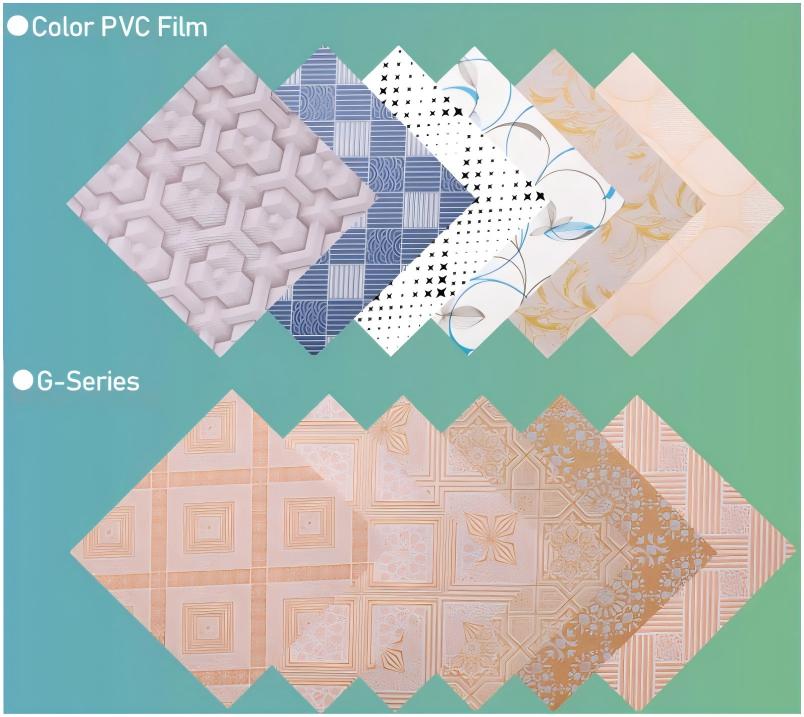
Danae supplies Gypsum Board PVC Film with a focus on consistent thickness control and lamination compatibility. The films are produced for standard ceiling board formats including 595 × 595 mm and 600 × 600 mm boards, with options for matte, embossed, and wood-grain finishes that meet common commercial interior requirements. For manufacturers and project buyers dealing with humidity-related call-backs, reviewing the film specification together with the laminating process is a more effective starting point than switching patterns. Details on film thickness ranges and lamination guidance are available on the product page: Gypsum Board PVC Film.
This guidance draws on lamination line audits and project call-back reviews handled by Danae's technical team.