

A crew upgrades to an automatic taper, and the first thing they notice is not the speed. It's the bubbles. A few panels in, sections of tape start lifting at the edges, and nobody is sure whether the problem is the tool setting, the compound, or the tape itself.
Most of the time, it's the tape.
Hot-press and hand-applied sealing paper are not interchangeable, even though they look similar on the roll. The starch coating on each version is formulated for a different activation trigger.
With a hot-press tool, the coating is built to activate under heat and mechanical pressure applied in a short burst. The tape moves through the tool fast. If the coating is too light for the tool's heat setting, it won't fully activate before the tape leaves the roller, and the bond stays weak along that section. If it's too heavy, it softens more than needed and can leave residue on the roller or interfere with the feed mechanism.
Hand-applied tape works differently. There's no heat involved, so the coating relies on the moisture and pressure of the compound alone. That makes it more forgiving in manual work-the installer can adjust pressure as they go-but it also means adhesion depends heavily on how evenly the tape is bedded into the joint.
The swap usually happens in one direction. A crew moves from manual work to an automatic tool but keeps ordering the same hand-applied roll. The tape feeds unevenly, or the coating doesn't fully activate under heat, leaving sections that look bonded but lift weeks later. The opposite-hot-press tape used for manual work-is rarer, but it has its own problem: the coating is designed for a heat trigger that never comes, so adhesion depends entirely on installer technique.
Neither failure shows up on day one. Both tend to surface as bubbles or hairline cracks well after the job is closed out.
For distributors and contractors, the practical step is to confirm the application method before ordering. If the crew runs automatic tools, the hot-press version is the correct match. If it's still hand work, the standard version performs more consistently.
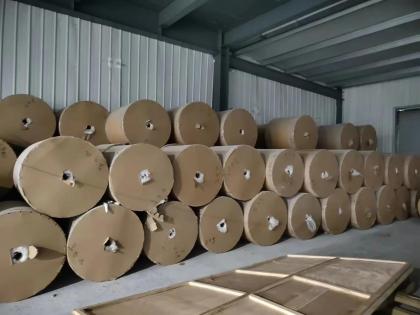
Danae supplies both versions in 60–70 gsm, with widths from 48 mm to 70 mm and roll lengths from 50 m up to 1000 m. The starch coating is controlled batch to batch, so activation behavior stays consistent across orders, not just within a single roll. Full specifications are listed on the sealing paper supplier page.
If a crew is mid-transition between manual and automatic application, confirm the tool model before placing a volume order. The tape that fits one setup does not always fit the other.