


"Chamber-type" vs. "Pit-type"-this is akin to choosing between an "above-ground garage" and an "underground storage room."
A chamber-type curing kiln is basically an "exclusive room" built above ground specifically for curing panels. Actually, its main advantages are flexibility and convenience. You can easily stack panels layer upon layer on racks and roll them inside; loading and unloading can be done using forklifts or rail systems, thus no need of excavation and also a very quick plant construction is possible. Moreover, since it is a self-contained room, temperature and humidity can be controlled with much better accuracy, so it is very suitable for curing mixed batches of panels with different thicknesses simultaneously. On the other hand, equipment costs are a bit higher because you even have to construct a building, install doors, and set up a circulation system.
A pit-type curing kiln is, quite simply, a large hole dug into the ground where panels are stacked vertically-much like a human pyramid-and then covered with a lid to retain heat. Its greatest advantage is cost-effectiveness: the initial investment is low, and its thermal insulation performance is actually quite good. However, the drawbacks are equally apparent: loading and unloading are cumbersome, typically requiring the use of a crane, and personnel must physically descend into the pit to perform operations, resulting in reduced safety and comfort. Additionally, temperature and humidity within the pit tend to be uneven; panels at the bottom and those at the top receive different treatment, which may compromise product consistency. Consequently, many factories that prioritize stable product quality are gradually transitioning to the chamber-type system.
Next, let's look at "atmospheric pressure" vs. "high pressure"-this is comparable to the difference between "slow cooking" and using a "pressure cooker."
Atmospheric-pressure curing involves heating panels with steam under standard atmospheric conditions (typically at temperatures not exceeding 100°C). In a similar way to how simmering a chicken soup requires a long time, around 8 to 12 hours, slow and gentle is the way of the process. Panelswhich are made with this method have enough strength in structure and can be used for things like standard interior wall panels and ceiling tiles, these are products that don't need very high performance. Besides, the energy used is quite low, and the machinery needed is not complicated.
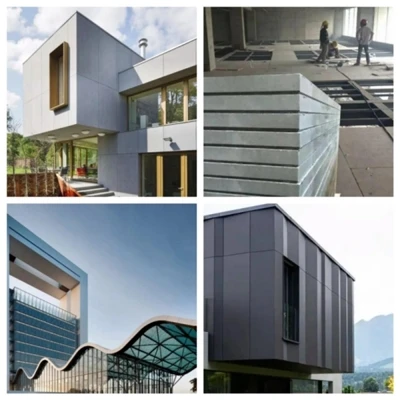
High-pressure curing (also known as autoclave curing) involves loading panels into a massive sealed pressure vessel-reminiscent of a submarine hatch-where they undergo "rapid maturation" using high-temperature, high-pressure steam (exceeding 160°C and reaching 8 to 10 atmospheres of pressure). This process is akin to using a pressure cooker to stew bones: within just 4 to 6 hours, it achieves the same level of curing effectiveness that would take a full day under atmospheric-pressure conditions. More importantly, high-pressure curing triggers a "hydrothermal reaction" within the boards, generating tobermorite crystals (don't be intimidated-that's just a fancy chemical term). This process results in boards with higher strength, lower drying shrinkage, and superior weather resistance. Simply put, the boards become sturdier and far less prone to deformation or cracking-making them ideally suited for demanding applications such as exterior wall panels, flooring, and high-density boards.

Here is my advice:
Think about your product positioning:If your main focus is low-cost interior wall panels, then atmospheric-pressure system with chamber- or pit-style curing units will do thejob for you. On the other hand, if your strategy is oriented towards producing high-end exterior wall panels or to satisfying the strict quality and safety requirements for export to Europe and North America, then high-pressure curing combined with chamber-style units is the best option for you.
Evaluate your budget and available space: Are you tight on capital but have ample land? You might consider a pit-style system paired with atmospheric-pressure curing. Are you prioritizing automation and consistent quality? Then grit your teeth and invest in a chamber-style, high-pressure setup; in the long run, the benefits-such as a lower rework rate and a stronger reputation-will more than recoup the initial investment through increased sales revenue.
High pressure should not scare you: Even though high-pressure machine buying is a big investment, the fact of the matter is that running cost is not as high as you might think. This is due to the fact that steam can be recycled, and the process is very efficient plus it produces a minimum number of defects. A lot of well-established manufacturers' first move in this direction is to get rid of the pit-style systems and to put the high-pressure autoclaves instead.