

Step 1: Clearly Define Project Requirements and Environment
Material selection begins with a deep understanding of the project itself. Please first clarify the following:
Building Height and Location: The building's geographical location determines the specific challenges it faces. In coastal areas, special consideration must be given to typhoon resistance and salt spray corrosion resistance. In high humidity or hot and dry regions, special requirements are placed on the weather resistance and freeze-thaw resistance of the panels. The seismic connection design between the panels and the frame system needs to be carefully considered based on seismic conditions.
Use: Is the material for exterior curtain walls (cladding), firewalls, balcony enclosures or fire protection in the core regions? Performance demands of panels vary widely in different locations.

Step 2: Focus on Core Performance Indicators
In view of the diversity in commodities on today's market, suppliers have to be asked for third-party test reports from their company based on international standards or project country-specific standards (e.g., ASTM, EN, BS, JIS, etc.).Pay close attention to:
Fire Safety (Paramount Importance): The "lifeline" of high-rise buildings. The key is to check the fire rating of the panels (e.g., A1 non-combustible) and their fire resistance rating. High-quality fiber cement boards should easily meet fire resistance requirements of 1-4 hours or even longer. Ensure that the entire system (including joint treatment) has fire certification.
Structural Strength and Wind Pressure Resistance: The panels must be able to withstand the strong wind loads specific to high-rise buildings. Key parameters include flexural strength and elastic modulus. Based on wind tunnel test data or local wind load regulations, calculate and determine the minimum thickness of the required panels (usually 12mm or thicker is recommended for high-rise exterior walls) and the supporting framing system design. Higher-density panels generally offer better mechanical properties.
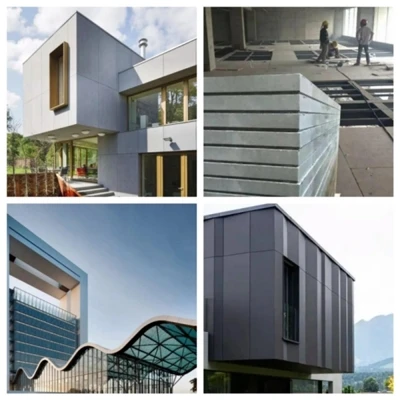
Durability and Dimensional Stability: High-rise building maintenance is costly, so materials need to be "long-lasting." Pay attention to:
Water Absorption and Swelling Rate: Extremely low water absorption is crucial to ensure the panels do not deform, crack, or affect the insulation layer in rainy and snowy weather. Excessive swelling can lead to deformation at the joints.
Freeze-Thaw Resistance: A necessary test for cold regions.
Resistance to Corrosion and Mold: The inner fibers as well as the additional constituent should posses perfect corrosion resistance; particularly, in chemical pollution area or with marine climate.
Aesthetics and Decoration: Choose surface treatments according to the design, e.g. high-pressure steam cured natural finishes, stone/metal paint effects or predecorated coatings. When done, verify the weathering resistance (UV resistance) and color retention of the coating.

Step 3: Evaluate Installation and System Compatibility
Excellent materials require a reliable system. Please confirm the following:
System Solution: Will the supplier offer a fully-tested installation system that will perform as well as the panels? This also includes different materials for the substructure and individual fastening (e.g. stainless steel or hot-dip galvanised screws), sealants as well as joint fillers. System compability is the corner stone to a working and safe system.
Processing and Construction Convenience: The panels are easy to cut and drill on site. The panels have standardized dimensions which reduce waste. The panels have weight which reduces installation labor and structural load.
Sustainability: An increasing number of projects have a focus on green certifications (like LEED, BREEAM). Ask about how much recycled product is in the panels, energy used to produce and impact on indoor air quality(such as low VOC emissions).