

The installation and fixation of explosion-proof boards is a specialized construction process, with the core objective of ensuring that the panels and the stud framework form a stable and reliable blast-resistant wall system. Taking the widely used Cement fiber explosion-proof board for engineering as an example, the standard installation procedure is as follows:
First, precise measurement and layout must be conducted based on design drawings prior to construction. When cutting, drilling, or performing on-site edge bevelling of the boards, specialized tools should be used. It is noteworthy that high-quality Cement fiber explosion-proof board for engineering typically comes with pre-finished bevelled edges for ease of joint sealing.
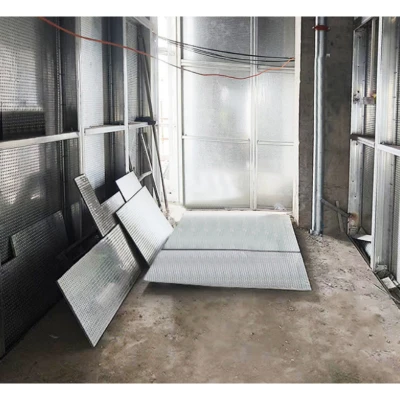
Next, mark the fixing points for the self-drilling screws on the board surface using chalk lines and pre-drill pilot holes. This step helps prevent surface cracking during installation. During installation, panels are usually mounted vertically, meaning the long edges are fixed perpendicularly to the vertical studs. Board ends should meet naturally; forcing them into place is strictly prohibited. Panel joints on opposite sides of the wall must be staggered and must not fall on the same stud, optimizing the overall structural integrity.
The key fixation step: Prior to fixing, pre-drill holes in both the board and the corresponding stud locations. The pilot hole diameter should be approximately 1 mm smaller than the diameter of the self-drilling screw. When fixing the Cement fiber explosion-proof board for engineering, specialized self-drilling screws must be used, following the sequence "from the center of the board outward to the edges" to ensure even stress distribution. All screws must be driven in uniformly, with the screw heads countersunk approximately 1 mm below the board surface to allow for subsequent blast-resistant sealing treatment.
The entire construction process requires a dry environment, and the stud framework must be level and secure. Standardized installation enables the full performance of such boards in terms of blast resistance, fire protection, and durability, constituting a crucial link in ensuring engineering safety.