

Let's start with the "Paper-Making Method." The paper-making method is a widely used traditional process. Its principle is similar to papermaking: raw materials such as fiber, cement, and quartz sand are dispersed in water to form a slurry. Thin layers are then "copied" using a rotating felting wheel, and the layers are subsequently wound, dehydrated, and pressed into shape.
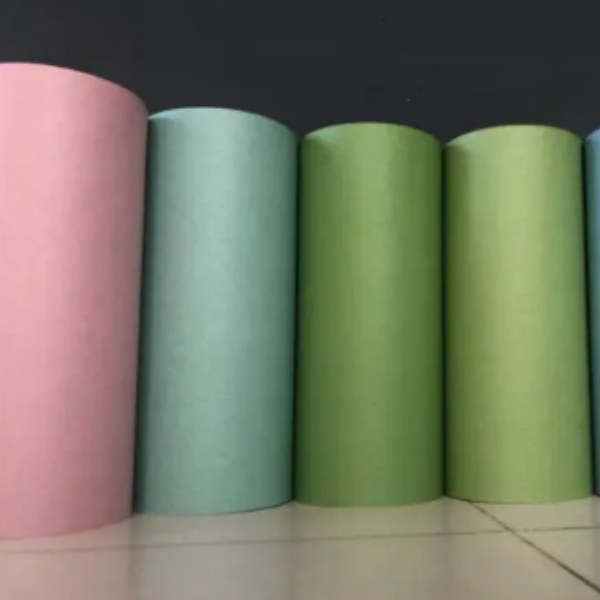
Advantages of the Paper-Making Method:
The boards are uniform and dense, with good interlayer bonding, especially stable in thin boards and medium-density fiberboard.
The surface is smooth and flat, suitable for direct painting, veneering, and other fine finishing treatments.
The process is mature, and quality control is relatively easy.
However, the paper-making method also has its limitations:
It involves a large amount of water circulation during production, resulting in higher energy consumption.
Controlling the thickness of the boards, especially the uniformity of ultra-thick boards (e.g., exceeding 20mm), can sometimes be challenging.
There is relatively more raw material loss, which puts some pressure on environmental protection.
Now let's look at the "Forming Method." The forming method is a relatively new process. Its process is more like "casting": the slurry is evenly distributed onto a running felt or steel strip, and then vacuum dewatered and high-pressure pressed to form the desired thickness in one step.
The Characteristics of the Forming Method:
Excellent thickness control, especially adept at producing thick plates, with good density uniformity along the thickness direction.
The plate structure is closer to "homogeneous," with a three-dimensional distribution of internal fibers, resulting in superior impact resistance and bending toughness.
High production efficiency, with less water and electricity consumption and less raw material loss, aligning better with the trend of green manufacturing.
Of course, there are also trade-offs:
Higher initial equipment investment.
For the production of ultra-thin plates (e.g., below 4mm), the pursuit of an extremely fine surface finish may not be as high as the sheet-fed method.
The "window" for process adjustment is relatively narrow, requiring higher precision in production management.

How can it be used by you?
What does understanding these processes mean for you?
For your application, if you are looking for an absolutely smooth finish for example on interior wall panels or countertop surfaces of furniture which will receive fine coating or thin wood veneers, then sheet-fed boards will likely offer more consistency than flow-formed boards.
On the other hand, if you value strength of construction and stability of the thickness of material, for example: when using ventilated curtain wall linings; outdoor type flooring; or other types of non-ventilated structures where heavy loads may be placed upon them, then flow-formed boards usually provide better overall performance and weather resistance than sheet-fed boards.
If the sustainability of your projects is of concern to you, and you are looking for possible ways to minimize the environmental footprint of your product, then you may want to consider the flow-formed boards and their potential for energy saving and emissions reduction.
As far as we are concerned, neither process is better or worse, as both are technological pathways created to address distinct concerns. The board's characteristics must align with the design parameters, conditions, and dedicated use of the board within the context of your project.