

Shipping a gypsum board wrapping machine to another country usually brings a few headaches. The unit is designed for our floor, but the buyer's conveyor might be a few centimeters too high, and the forklift driver turns left instead of right. That is why we spend days on layout drawings before taking the deposit.
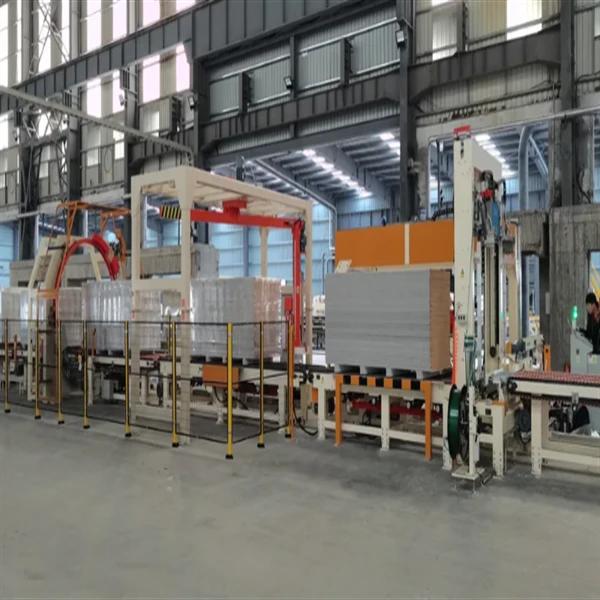
Stop ordering film before checking your conveyor height
Most buyers open the conversation with speed and film type. We usually stop them there and ask what the machine will sit next to. If the wrapper receives boards directly from a forming line, the inlet height and roller spacing must match exactly. If a forklift moves the boards first, the wrapper becomes a standalone station, and the whole layout changes.
We ship to Southeast Asia, Russia, the Middle East, Africa, and Central Asia. In many of these projects, we have to revise the layout drawing before finalizing the order. It is annoying, but normal. A gypsum board wrapping machinethat fits the line saves more time than one that runs fast but sits in the wrong place.
We learned the climate issue the hard way
We used to quote stretch film by thickness alone. Then, an early batch shipped to a coastal plant in Southeast Asia using standard wrapping. Two weeks later, the buyer reported damp edges. It was a lesson for our engineering team. We realized that a packing recipe must match the destination climate.
Since then, we have made it a mandatory step to ask for the destination port before quoting film. High humidity means we change the pre-stretch ratio and add more wrapping layers. Dry inland areas get a different setting.
The palletized setup positions boards with ±1mm precision and handles film heights up to 150mm. Power draw is 1.35kW or 12.5kW depending on the configuration. These specs matter, but the setup depends on whether the stack sits in a warehouse for two days or crosses an ocean for six weeks.
Our testing is more than a routine check
Before shipping, we run the machine for a full test cycle. We send the video to the buyer, including any parameter changes we made during the run. If they want a third-party inspection, we arrange it. If they want to watch the test live online, we set a time.
It takes longer than sending a spec sheet and a proforma invoice. It is also annoying for our production team. But it means fewer calls when the machine reaches a plant where the electrician reads a different wiring standard or the forklift driver takes a different path to the loading bay.
The first week after installation is the real test
The first week of operation is when most problems show up. Film breaks at a specific speed, boards shift at a certain stack height, or a sensor trips because of dust. Our engineers stay reachable that week in Chinese, English, or Russian, and we adjust parameters remotely where possible.
A gypsum board wrapping machine that runs perfectly in our factory but fails on the buyer's floor is not a finished delivery.