

I have seen plenty of gypsum board lamination machine videos where the line runs smooth on a polished showroom floor. Our workshop is not that. It is loud, a bit dusty, and there is usually a forklift blocking the aisle. But that is exactly where a machine proves whether it can handle real work. Today, I want to show you what we actually put the equipment through before it gets wrapped in plastic and loaded into a container.
First, we just check if it fits
Before we even wire the motors, we lay out the frame, the rollers, and the cutting saw on our floor. We mimic the exact sequence it will run on your site. We check if a guard is blocking the operator's reach, or if the conveyor is too high for a normal forklift to feed. This is the cheapest test we do, and it saves the most headache. The whole line might look fine on a CAD drawing, but on the floor, you quickly see if the layout is clumsy.
We wire the brain before the muscles
Look at the control panel photos. You will see a lot of neat wires. We build the PLC logic and electrical cabinets early, while the steel frame is still being tightened. The double-sided synchronous coating system on our PVC Gypsum Board Lamination Machine is picky about timing. If the film unwinding and the glue application are even a fraction of a second out of sync, the PVC will wrinkle. We test that logic in the cabinet first. It makes the build slower, but when we hit the start button, the machine responds instantly.
The dry run, listening for trouble
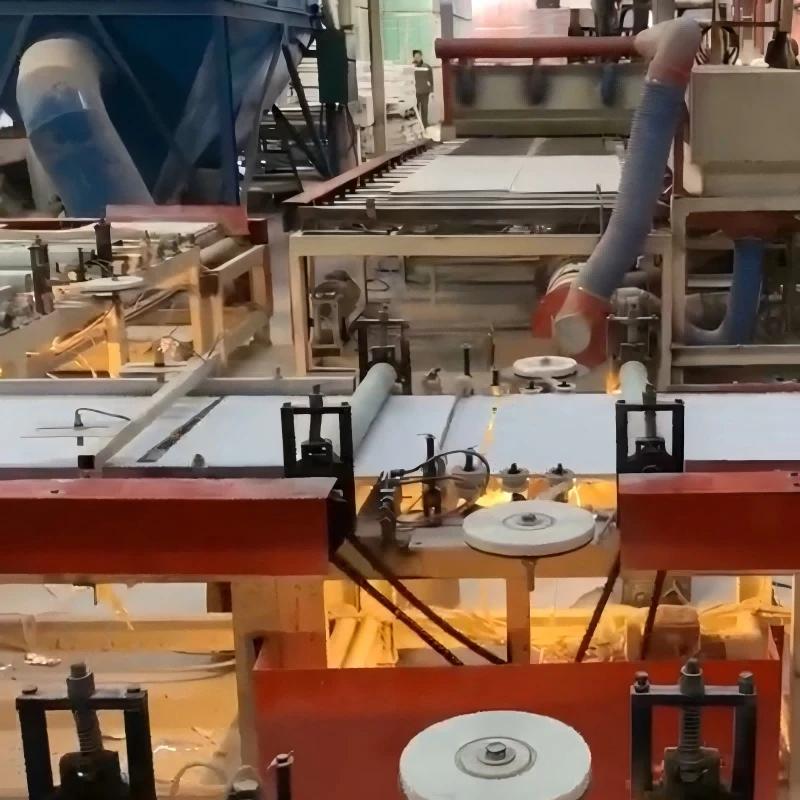
Once the frame and cabinets are together, we push some bare boards through. No PVC film, no glue. This is the dry run. We stand right next to the conveyor and listen. If a roller bearing is whining, or a board wobbles when it hits the cutting saw, we adjust the guide rails before moving on. A tiny wobble here becomes a jam on your factory floor. There is no point hiding a rattle. We would rather fix it now than have you hear it on a video call three months later.
Then we add the glue and film
The dry run proves the frame is stable. Then we add the materials. We feed the PVC film and aluminum foil, and this is when the strictest test happens. The wet run. We check for any glue bleeding at the edges, or wrinkles near the corners. The machine does not pass until the finished ceiling tiles stack perfectly flat, the way they do in our test stacks. A lamination line runs on rhythm. If it stutters here in our workshop, it will stutter on your site. Our operators note down the exact speed and temperature settings that gave the best result, and those notes go straight into the shipping file.
Once it passes, we take photos and videos. Not the glossy marketing shots, but reference shots for the assembly. When we strip the line down for shipping, we label every section and the control cabinet. You get a clear map of how it goes back together.
We also check how it fits your factory. If you are adding a Gypsum Ceiling Tile Factory Equipment setup, we verify the in-feed and out-feed heights against standard trolleys.

If you are adding a PVC Film Laminating Machine for Gypsum Board to an existing line, we simulate how it sits next to your current machinery.The gypsum board lamination machine should not be a mystery box that arrives in pieces.
What I would ask for if I were buying
If you are sourcing a line, ask for the raw video. Not the 3D animation, but the actual camera footage of the dry run and the wet run. Look at how the boards move, and look at the edges when they come out. If you want to see more details of our ceiling tile equipment, you can browse our gypsum ceiling machine products page. If you have a specific floor layout or a tricky board size, send it over. Our team will run a layout match check before you send the deposit. I would rather spend an extra hour on the video call now than deal with a custom frame that missed a dimension later.