

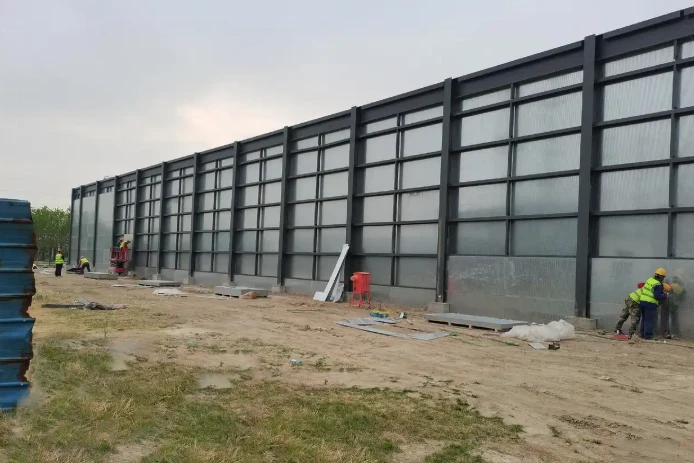
The explosion-proof fiber cement board wall is an efficient and reliable protective structure widely used in flammable and explosive environments like chemical plants, oil refineries, and pharmaceutical facilities. It is designed to quickly release pressure during an explosion, minimizing damage to buildings and personnel. Below is a brief overview of the construction plan for this explosion-proof wall:
I. Pre-Construction Preparation
Material Preparation
Fiber-reinforced cement boards: Sourced from a qualified explosion-proof fiber cement board factory, these boards must comply with national standards, offering high strength, fire resistance, and impact resistance, typically with a thickness of 9.5mm.
Furring system: Light steel or galvanized steel furring, with specifications determined by design requirements to ensure structural stability.
Connectors: Specialized self-tapping screws, expansion bolts, sealants, etc.
Auxiliary materials: Fire-resistant rock wool, sealing strips, putty, coatings, etc.
Tool Preparation
Power tools: Electric drills, screwdrivers, cutting machines, etc.
Measuring tools: Levels, tape measures, plumb lines, etc.
Safety equipment: Hard hats, safety goggles, gloves, etc.
Technical Preparation
Familiarize with construction drawings to clarify the location, dimensions, and pressure relief requirements of the explosion-proof wall.
Develop a construction plan and conduct technical briefings to ensure workers understand the process and safety protocols.
II. Construction Process
Base Treatment
Clean the wall base to ensure it is level, dry, and free of oil or contaminants.
Repair uneven areas and apply leveling treatment if necessary.
Furring Installation
Mark out lines on the wall according to design drawings to determine furring placement.
Install top, bottom, and vertical furring members, ensuring vertical and horizontal alignment.
Furring spacing should adhere to design requirements, typically 400-600mm.
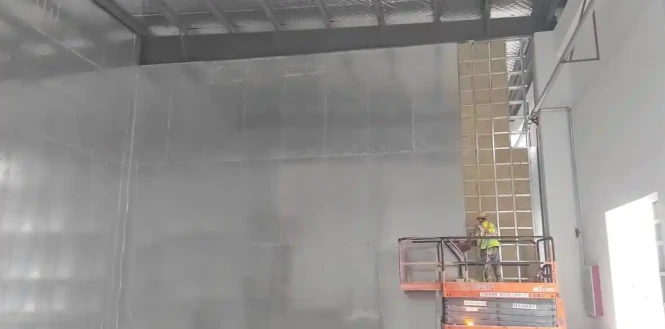
Installation of Fiber-Reinforced Cement Boards
Cut the boards to the required dimensions, ensuring straight edges.
Secure the boards to the furring using self-tapping screws, with screw spacing not exceeding 200mm and edge screws placed 10-15mm from the board edges.
Stagger board joints during installation to avoid continuous seams.
Pressure Relief Openings
Reserve pressure relief openings at designated locations and install explosion relief bolts or doors.
Reinforce the furring around the openings to ensure structural stability during pressure release.
Joint Treatment
Fill board joints with sealant to ensure airtightness.
For joints wider than 5mm, install fire-resistant strips before applying sealant.
Surface Treatment
Sand the board surfaces to remove burrs and stains.
Apply anti-rust paint or fire-resistant coatings to enhance durability and fire performance.
Inspection and Maintenance
Conduct quality inspections upon completion, checking board installation, joint treatment, and functionality of pressure relief openings.
Regularly inspect the integrity of the explosion-proof wall and repair any damage promptly.
III. Key Construction Considerations
Pressure Relief Performance
The wall must meet design pressure relief requirements to ensure rapid pressure release during an explosion.
Explosion relief bolts or doors should be inspected regularly to ensure smooth operation.
Fire Performance
Boards and furring must meet fire rating requirements, typically Class A non-combustible materials.
Fire-resistant sealants should be used at joints to prevent fire spread.
Impact Resistance
Boards must pass impact resistance tests to ensure they do not shatter under explosive forces.
The furring system must provide sufficient strength to support the boards during pressure release.
Environmental Requirements
Materials must comply with environmental standards, avoiding substances like formaldehyde.
Dust control measures should be implemented during construction to minimize pollution.

IV. Safety Precautions
Workers must wear appropriate safety gear and adhere to elevated work safety protocols.
Open flames are strictly prohibited on-site to prevent fire hazards.
Power tools should be checked for insulation before use to avoid electric shock risks.
Coordination with main structural construction is essential to avoid interference from overlapping tasks.
As a trusted explosion-proof fiber cement board factory, we ensure all materials and processes align with the highest standards of safety and reliability.