

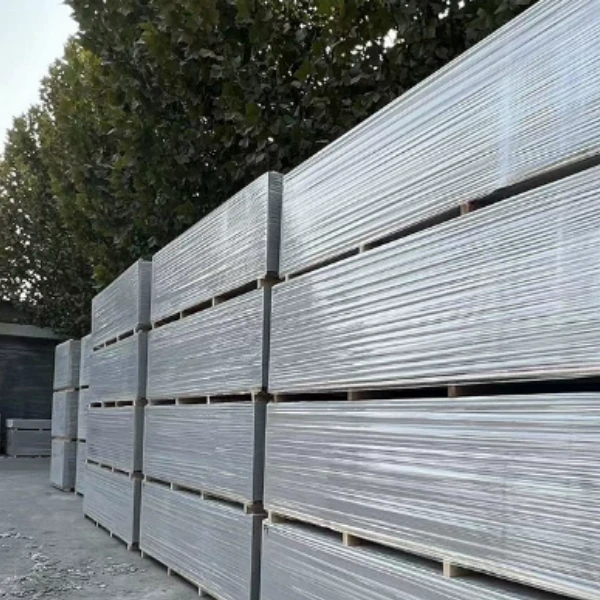
A raw fiber cement board is delivered straight from the factory in its original state. It features a natural grayish-brown or cement-gray surface with a slightly rough texture, just like an unpainted blank canvas.
-
Ideal applications for raw boards:
Indoor partition walls and ceilings in dry areas
Perfect for office partitions and residential ceilings. These spaces stay dry with no direct rain exposure or heavy impact, making raw boards the most cost-effective choice.
Projects requiring on-site secondary finishing
Most construction crews purchase raw boards to apply putty, latex paint, tile or wallpaper on-site. Going for pre-finished coated boards here would be a waste of budget, as the factory paint layer would get ruined during subsequent construction work.
Industrial-style spaces & custom molding projects
Raw boards are ideal if you prefer the raw, authentic cement texture, or need to cut boards into narrow custom strips for special designs. They offer great flexibility, and there's little cost loss even if cuts go slightly off. -

Drawbacks of raw boards:
A raw board is just a plain cement panel right out of purchase. You'll need extra labor for sanding, dust removal, priming and topcoat painting. The on-site finishing process costs a lot in labor fees and creates massive dust mess. The final look also heavily depends on the painter's skill level.
If used in bathrooms or semi-outdoor areas like patio canopies without professional high-grade sealing treatment, raw boards tend to absorb moisture and get permanently stained over time.
Coated boards that are pre-finished are made by using high-performance paints (flourocarbon and polyester paints) to coat raw board surfaces with coating multiple times and then baking the coated boards under high heat. The purpose of the painted finish on the pre-finished board is not only to provide an attractive finished surface but also act as an exceptionally tough and durable protective covering.

Ideal applications for pre-finished coated boards:
Building exterior curtain walls
This is the primary use case for coated boards. They are the go-to option for exterior cladding on shopping malls, hotels and villas. The dense factory paint layer resists long-term sun exposure, rain erosion and acid rain damage without fading. Raw boards used outdoors will discolor and look worn out in just half a year.
Indoor spaces requiring high cleanliness standards
Suitable for hospital operating rooms, food factory workshops and subway stations. These environments demand smooth, dust-resistant surfaces that are easy to wipe clean. Coated boards have a sleek, wipeable surface with antibacterial properties. The rough porous surface of raw boards traps dirt and dust, making them completely unsuitable here.
Humid environments
Bathrooms, laundry rooms and basements are perfect fits. The coated surface fully locks out moisture from seeping into the board core, preventing deformation and mold growth for decades.
Fast-track construction projects
Tight project timelines or a desire to avoid messy on-site painting work? Pre-finished coated boards are the perfect pick. They can be installed directly after simple on-site cutting, with no extra surface treatment needed-ready to use right after installation.
As a supplier offering both raw and pre-finished coated fiber cement boards, here's my straightforward advice:
Residential renovation (sufficient budget): Use coated boards for exterior walls, bathrooms and kitchen stove areas; opt for raw boards in dry areas like bedrooms and living rooms for custom on-site painting.
Commercial contractors: Crunch the full cost: raw board price plus on-site painting labor often ends up nearly equal to pre-finished coated boards. What's more, factory-baked paint has far better hardness and durability than on-site spray paint. Choosing coated boards cuts down future maintenance and after-sales headaches significantly.